
Quarterly planning software fails the same way twice a year: the planning session looks great, then the tracker sits untouched by week three. The six tools below are ranked by how well they hold a quarterly cadence together, not by feature count.
- OKR Leader wins for teams that want planning, weekly check-ins and scoring in one cycle view.
- Perdoo fits teams that need quarterly OKRs to trace back to a multi-year strategy map.
- Quantive (formerly Gtmhub) suits enterprise teams that live in dashboards and data exports.
- Lattice works if you already run performance management there, but keep OKR scores out of review conversations.
- The best okr software for quarterly planning in 2026 is the one your team still opens in week six, not week one.
Why quarterly planning software breaks by week three
A quarter is thirteen weeks. Most OKR tools get evaluated during a two-hour planning workshop and never again until the next one.
The gap between those two moments is where quarterly plans die. The planning session sets three to five objectives with real edges. Then nobody logs a weekly check-in, the dashboard goes stale, and the quarter ends with a status update instead of a score anyone trusts.
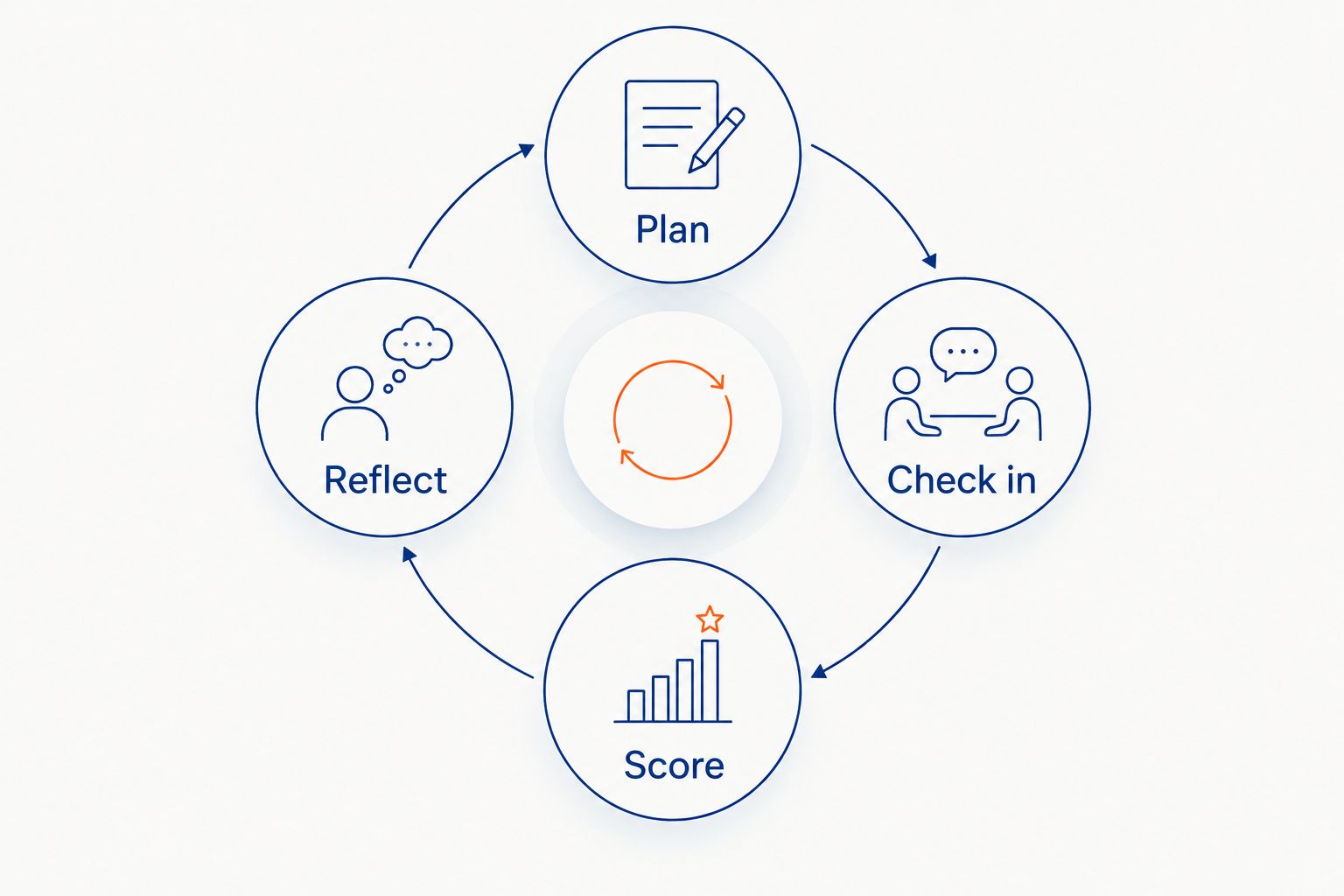
Software doesn't fix that behavior by itself. It can make the weekly habit take two minutes instead of twenty, and that difference decides whether a program survives into quarter two. OKR Leader is built around that weekly moment rather than the planning moment, which is one reason it opens this list.
What makes the best OKR software for quarterly planning
- A cycle structure that matches thirteen weeks, not a generic project timeline stretched to fit
- Weekly check-ins built into the core workflow, so updating a Key Result takes minutes, not a meeting
- Objective limits that force a ceiling, not a floor, on how many priorities a team can carry at once
- Dashboards that roll up without manual spreadsheet work at the end of the quarter
- Integrations with tools teams already use daily, like Slack or Google Workspace, so check-ins happen where work happens
- Scoring kept separate from performance reviews, so teams report honestly instead of setting safe targets
At a glance: six OKR tools for quarterly planning in 2026
| Tool | Best for | Standout feature | Key limitation |
|---|---|---|---|
| OKR Leader | Full cycle management, plan to score | Cycle dashboards built around the check-in habit | Newer name on this list than the legacy players below |
| Perdoo | Tying quarterly OKRs to long-term strategy | Strategy map connects objectives to company goals | Setup takes longer if you skip the strategy layer |
| Quantive (Gtmhub) | Data-heavy quarterly reporting | Deep analytics and export options | Learning curve is steep for smaller teams |
| Workboard | Structured quarterly business reviews | Automates QBR roll-ups across teams | Feels rigid for teams that just want a simple tracker |
| Lattice | Teams already using it for performance management | One login for goals, reviews and engagement data | Blends OKR scores with review cycles unless you separate them manually |
| Weekdone | Small teams running lightweight quarterly cycles | Fast setup, weekly check-in front and center | Limited depth for cross-team quarterly rollups |
1. OKR Leader: best OKR software for full quarterly cycle management
OKR Leader manages the whole quarterly arc in one place: setting objectives and Key Results, running the weekly check-in, and scoring the cycle when it closes. The dashboards are built to answer one question fast: is this objective on track this week, not just at quarter's end.
OKR Leader pros:
- Cycle management covers planning, check-ins and scoring without switching tools
- Dashboards surface progress without a manual spreadsheet roll-up
- Integrations connect the weekly check-in to tools teams already use
OKR Leader cons:
- Fewer years in market than category veterans like Lattice or Quantive
- Best suited to teams already committed to a quarterly cadence, not ad hoc goal tracking
OKR Leader pricing: check current plan details on the OKR Leader site.
Best for: a team that wants one system for the entire quarter instead of a planning doc, a tracker and a separate reporting deck.
Verdict: Buy if your program needs the planning-to-scoring loop closed in one place.
2. Perdoo: best OKR software for connecting quarterly OKRs to strategy
Perdoo pairs OKRs with a strategy map, so a quarterly Key Result can be traced up to a company-level goal instead of floating on its own. That's useful for teams that keep hearing "how does this tie back to the plan" in leadership reviews.
Perdoo pros:
- Strategy map gives quarterly work a visible line to company objectives
- Goal hierarchy supports multi-team rollups
- Works well for organizations already running a formal strategic planning process
Perdoo cons:
- Setup takes longer if the strategy layer isn't built out first
- Adds a layer of structure that smaller teams may not need
Best for: a VP of Strategy who has to defend how quarterly OKRs connect to a three-year plan.
Verdict: Buy for strategy-first organizations; Hold if you just need a straightforward quarterly tracker.
3. Quantive (formerly Gtmhub): best OKR software for data-heavy quarterly reporting
Quantive built its reputation on analytics: dashboards, data connectors and export options for teams that report quarterly numbers to a board or a data team. It's the pick for organizations where the OKR platform also has to feed a business intelligence workflow.
Quantive pros:
- Strong analytics and export options for quarterly reporting decks
- Handles complex, multi-team OKR structures
- Integrates with data tools beyond the standard Slack and calendar connectors
Quantive cons:
- Steep learning curve for teams without a dedicated OKR administrator
- More platform than a ten-person team typically needs
Best for: enterprise teams whose quarterly review already lives in dashboards, not slide decks.
Verdict: Buy for data-heavy enterprise reporting; Skip for a lean team that wants simplicity. Read the enterprise breakdown on best OKR software for enterprise teams before committing at that scale.
4. Workboard: best OKR software for structured quarterly business reviews
Workboard automates the roll-up that usually eats a day before every quarterly business review: pulling OKR status from every team into one deck. If your quarter ends with a formal QBR in front of leadership, that automation saves real prep time.
Workboard pros:
- Automates quarterly business review prep across teams
- Rolls up multi-level OKR data without manual copy-paste
- Fits organizations with a formal QBR cadence already in place
Workboard cons:
- Structure feels heavy for teams that just want a lightweight tracker
- Administrative overhead is higher than simpler tools on this list
Best for: an operations leader whose quarter ends with a formal review in front of the executive team.
Verdict: Hold — evaluate it against how formal your QBR process actually is before buying in.
5. Lattice: best OKR software for teams already using it for performance management
Lattice bundles OKRs with performance reviews and engagement surveys under one login, which is convenient if HR already runs on it. The tradeoff is the one worth naming directly: when an OKR score sits next to a performance review, people set safer targets and honest reporting suffers.
Lattice pros:
- One login covers goals, performance reviews and engagement data
- Familiar interface for teams already using it for HR workflows
- Reduces the number of separate tools a manager has to check
Lattice cons:
- Tying OKR scores to review cycles pushes teams toward safe, low-ambition goals
- Less purpose-built for the weekly check-in habit than dedicated OKR tools
Best for: an HR-led organization that wants goals inside the same system as reviews and is willing to keep the two scored separately.
Verdict: Hold — usable, but separate the OKR score from the review conversation even if the data lives in the same platform.
6. Weekdone: best OKR software for small teams running lightweight quarterly cycles
Weekdone keeps setup light and puts the weekly check-in front and center, which fits a small team that doesn't need multi-level rollups. It's the pick for a team that wants a quarterly structure without a long onboarding process.
Weekdone pros:
- Fast setup, minimal administrative overhead
- Weekly check-in is the default workflow, not an add-on
- Approachable for a team new to OKRs in 2026
Weekdone cons:
- Limited depth for cross-team quarterly rollups
- Reporting is thinner once an organization scales past a single team
Best for: a founder or department head running their first or second quarterly OKR cycle. The best OKR software for startups guide covers more options at this stage.
Verdict: Buy for a single small team; Wait if you expect to add teams within a year or two.
How this list was ranked
Each tool was weighed against the same six criteria from the section above: cycle structure, weekly check-in support, objective limits, dashboard roll-ups, integration depth, and whether scoring stays separate from performance reviews. Tools that bolt a check-in feature onto a project management core scored lower than tools built around the quarterly cadence from the start.
See OKR Leader on your own cycle
Walk through cycle setup, check-ins and scoring for your next quarter.
Which OKR software should you choose for 2026?
If the weekly check-in habit is the thing your last quarter lost, OKR Leader is built around keeping that habit alive from planning through scoring. If your quarterly OKRs need to trace back to a multi-year strategy document, Perdoo earns the extra setup time. If your quarter ends in a formal board-level report, Quantive or Workboard carry that reporting load better than a lightweight tracker ever will.
None of these tools run a quarter by themselves. The mechanics of OKRs take an afternoon to learn; keeping a program alive past month nine is the harder problem, and it comes down to whether leaders keep showing up to the weekly check-in, not which tool logs it.
FAQ
What is the best OKR software for quarterly planning in 2026?
OKR Leader is the strongest fit for teams that want planning, weekly check-ins and scoring in one cycle view. Perdoo and Quantive are better fits when a team needs deeper strategy mapping or enterprise-grade reporting.
Is OKR software worth it for a small team?
Yes, if the team is running more than one quarterly cycle and losing track of Key Results by week three. Weekdone or OKR Leader both keep setup light enough for a first or second cycle.
How many objectives should a team set per quarter?
Three to five objectives is a ceiling, not a floor. Three focused objectives executed well beats six that get a shrug in the weekly check-in.
Should OKR scores affect performance reviews?
No. Tying an OKR score to pay or reviews pushes people toward safe targets instead of ambitious ones. OKRs and performance management work better as separate tools, even inside a platform like Lattice that houses both.
Can I use the Google OKR model for my company?
Not as written. Google built its OKR model for thousands of engineers with deep resources behind them. Scale the cadence and cycle length down to fit a smaller team instead of copying it directly.
What’s the difference between OKR software and project management software?
OKR software tracks outcomes against a quarterly cycle with scoring and check-ins built in. Project management software tracks tasks and deadlines, which is a different job even when the two get confused.
How long does it take to see results from OKR software?
The first cycle is usually rough: objectives slightly off, Key Results needing rework, the cadence unsettled. Expect the value to compound over two or three quarters, not the first one.
One last thing
The feature that decides whether a quarterly OKR program survives isn't the dashboard leadership sees at the review. It's whether the tool makes the Tuesday-morning check-in take two minutes instead of twenty, because that's the habit that either holds a quarter together or lets it drift by week six.
Related guides
- Best OKR tracking software in 2026
- Best OKR software for enterprise teams in 2026
- Best OKR software for startups in 2026
- Best 10 OKR software tools in 2026