

Strategic Focus When Everything Feels Urgent
Use case: focus on what matters
Strategic Focus When Everything Feels Urgent
Strategic focus gets harder the busier a team becomes. A client escalates, someone needs a report by Friday, the inbox refills overnight, and the priorities from planning day get whatever time is left at the end of the week. OKR Leader helps leadership teams choose a short list of Objectives, connect the week’s projects and tasks to them, and see how much of the team’s time is actually going toward them.
Where it slips
Why do teams lose focus on their priorities?
A full calendar feels productive. Back-to-back meetings and a fast inbox look like progress, even in a week when none of the quarter’s Objectives moved an inch.
When I talk with leaders about this, the same story comes up. Planning day ends with eight priorities because nobody wanted to cut a colleague’s project, and by March the team is spread thin across all eight. Five warning signs show up along the way:
The list keeps growing
One team leaves planning day with more than five Objectives, and every one of them felt urgent in the room.
Busy weeks and flat numbers
The team worked hard all month and none of the Key Results moved.
Urgent work always wins
Client requests and internal reports fill the week, and the strategic work waits for a free Friday that never comes.
Nothing comes off the list
New work gets added mid-quarter and nobody drops anything to make room for it.
The basics start slipping
Chasing new goals pulls attention away from cash, churn or delivery times.
Every one of these starts with a sensible choice. Added together, they spread a team’s time so thin that no single priority gets enough of it.
The short answer
What is strategic focus?
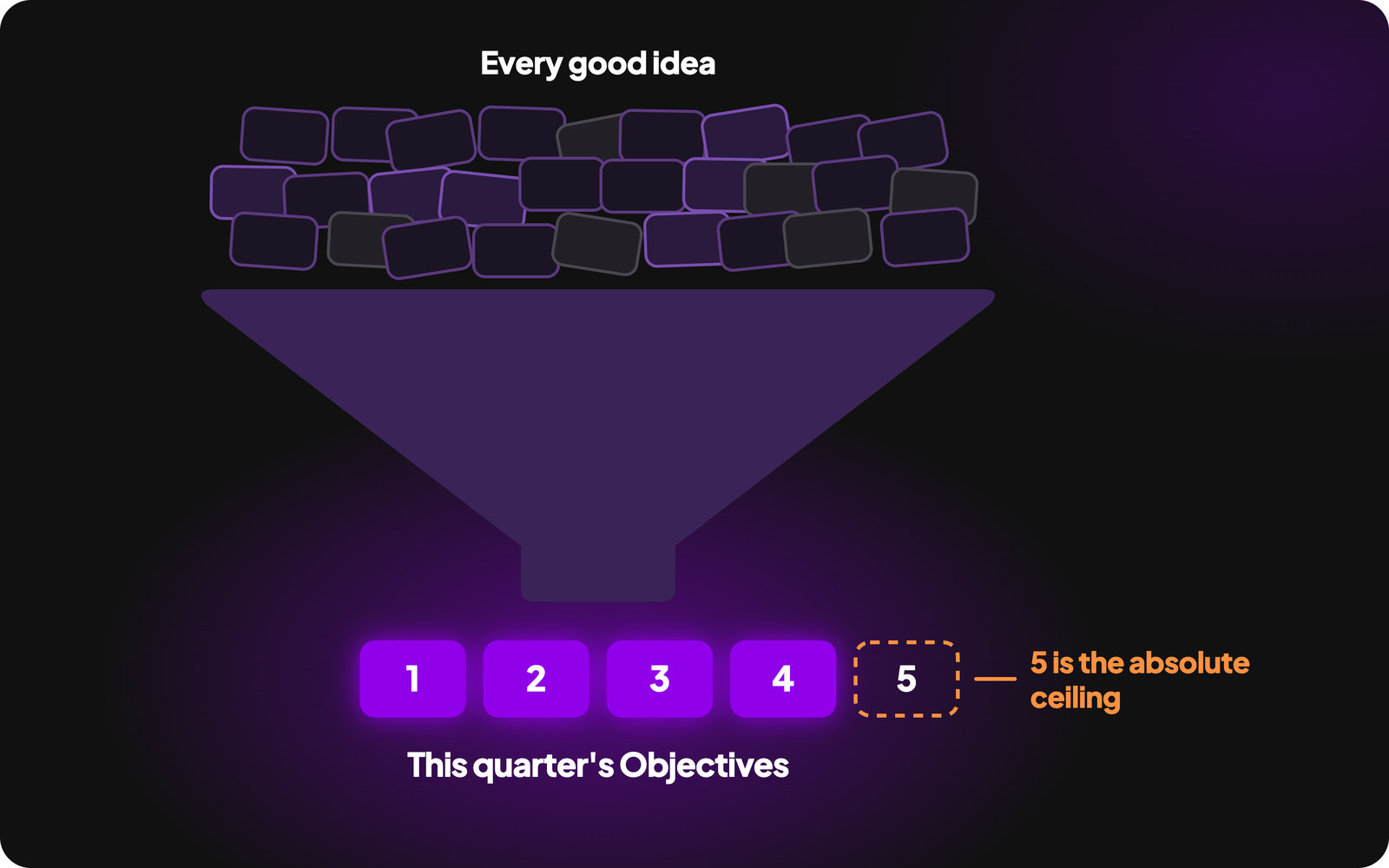
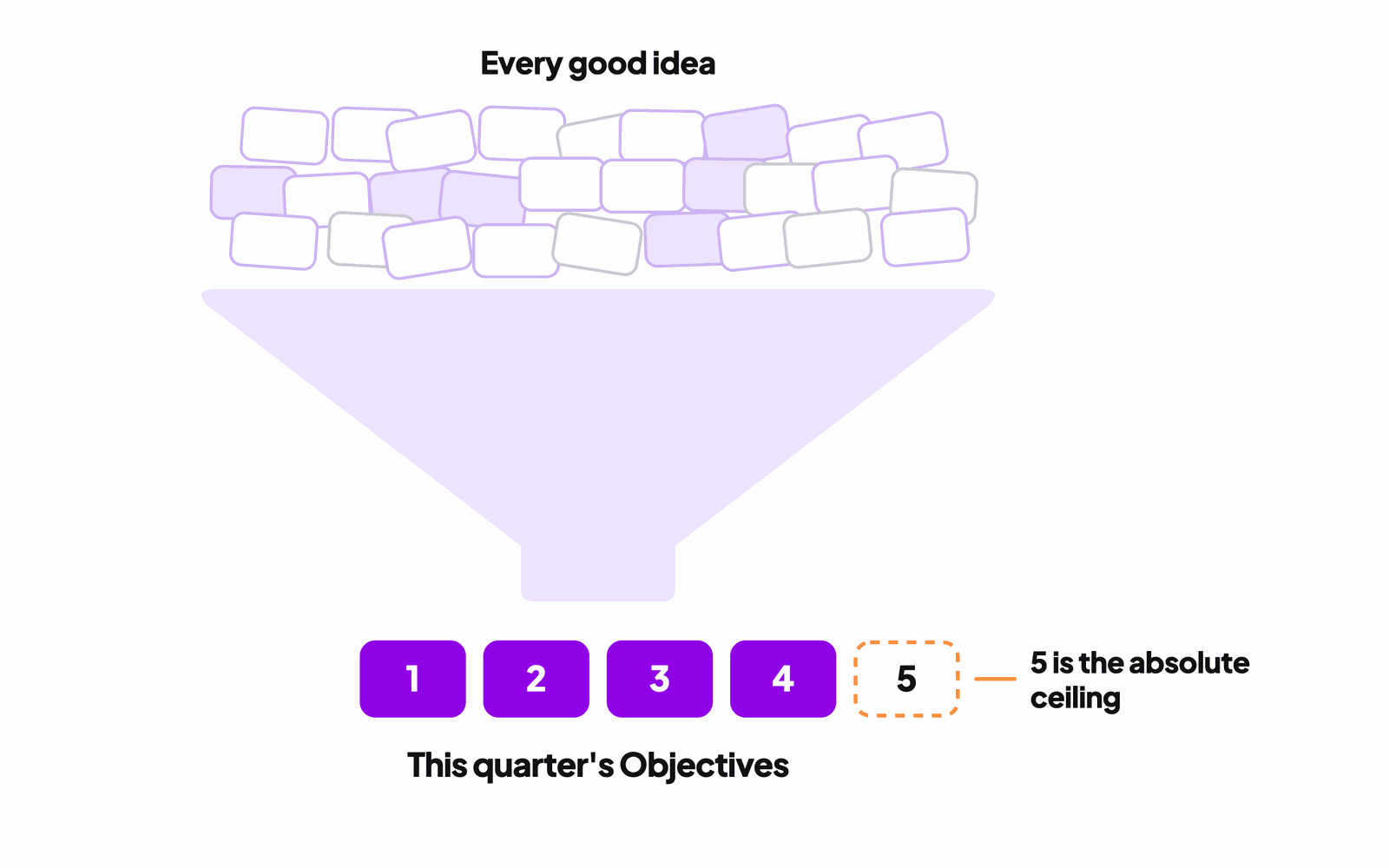
Strategic focus means a team commits to a small number of outcomes for the cycle and protects the time to deliver them. OKR Leader’s guidance is one to four Objectives per team per cycle, never more than five, with two to five Key Results under each. Everything else either supports those Objectives, keeps the business healthy, or waits on a parked list for a later cycle.
How OKR Leader helps
Five ways OKR Leader protects your team’s focus
See every team’s list before the quarter starts
Each team’s Objectives for the cycle sit in one place, so leadership can spot a team carrying eight priorities while there’s still time to trim the list.
Tie projects to the Key Results they move
Every project can be linked to the Key Results it’s meant to help. A project with no link stands out, which makes it easier to ask whether it belongs in this quarter at all.
See where the week went
Tasks can be tagged as strategic or operational, so a team lead can filter the week’s work and see how much of it went toward the quarter’s goals.
Bring the priorities into every meeting
Meetings link to the OKRs they cover, so the weekly check-in opens on the quarter’s goals and the agenda stays there.
Notice a priority losing ground
Each Key Result update includes the owner’s confidence that it will hit its target. A confidence rating that keeps dropping tells you a priority needs attention weeks before the final score would.
Try this with your team
How to help your team focus on what matters
You can run these steps at your next planning day, in OKR Leader or on a whiteboard.
- List every priority the team is carrying right now, including the ones nobody ever wrote down.
- Choose one to four Objectives for the cycle, and move the rest to a written parked list so they aren’t lost.
- Name the health metrics the business has to protect, such as cash, churn or delivery times, and agree on what happens if one of them slips into the red.
- Block time for OKR work in everyone’s calendar each week, and treat that time with the same respect as a client meeting.
A short list stays short when someone keeps an eye on it. The weekly check-in is where new requests get weighed against the Objectives already on the list, so it’s worth pairing these steps with a check-in your team actually attends.
Free resources
Go deeper on focus
Frequently asked questions
How many OKRs should a team have?
Aim for one to four Objectives per team per cycle, and never more than five. One main Objective is a sound choice for a small team or a tight budget. Each Objective gets two to five Key Results, and three is a good default.
What should we do with the priorities that didn’t make the list?
Write them on a parked list and bring it to the next planning day. Some will still matter in three months. Others will have sorted themselves out, and the team will be glad it kept its time for the Objectives it chose.
Should OKRs cover all of our work?
No. OKRs cover what needs to change this cycle. Routine operations stay outside them, and the numbers that keep the business running, like cash and churn, are tracked as health metrics that you protect while the OKRs push for change.
What if an urgent request lands in the middle of the quarter?
Weigh it against the Objectives you already have. If it matters more than one of them, swap it in openly and pause something to make room. Piling it on top is how a team ends the quarter with ten half-finished priorities.
How do I get leadership to agree to a shorter list?
Show them the full list next to the hours available. A leadership team looking at eight priorities competing for the same few people can see the problem for itself, and a parked list makes letting go of the rest less painful.
Put this quarter’s priorities in one place
Start a free trial and set up this cycle’s Objectives with your team. Or take the free OKR Starter Course first and learn how to build a short list your team will stick to.