

Profit Per Employee: Profitable Growth for Owner-Led Companies
Use case: grow profitably
Profit Per Employee: Profitable Growth for Owner-Led Companies
Profitable growth asks more of a business than revenue growth does. Sales can climb for a full year while margins shrink, the team doubles and the owner works longer hours than ever. OKR Leader helps owner-led companies set goals for margin, retention and revenue per employee alongside their sales goals, so the business grows in a way that pays for itself.
Where it slips
Why does revenue grow while profit stays flat?
Owners chase revenue for good reasons. It’s the number the bank asks about and the easiest one to track, and a rising line feels like proof the business is working. Profit moves more slowly and shows up later, so a slide can go unnoticed for a year.
Four warning signs show that growth has stopped paying for itself:
Every growth goal measures revenue
The Key Results cover sales, sign-ups and new clients, and none of them touch margin or retention.
Headcount grows faster than profit
The team keeps hiring to keep up, and profit per employee is flat or falling.
Key Results count activity
Goals track calls made or quotes sent, so revenue can rise while the work costs more than it brings in.
The vital signs go unwatched
Cash, margin and churn drift while everyone chases the growth target.
Profitable growth also depends on where you want the business to end up. Some owners want to build something large. Others want a company that stays a manageable size, runs well and pays them properly. Both are valid goals, and OKRs help you reach whichever one you choose.
The short answer
What is profitable growth?
Profitable growth means the business grows in a way that improves profit along with revenue, so each new client, hire or product adds more than it costs. Profit per employee is a useful way to measure it, because it shows whether the team gets more productive as it grows. OKRs support profitable growth when their Key Results measure outcomes such as margin, retention and revenue per employee.
How OKR Leader helps
Four ways OKR Leader keeps growth profitable
Write Key Results that measure profit
Set a starting value and a target for margin, retention or revenue per employee, and update them each week right next to your sales Key Results.
Tie OKRs to the business you want to build
Record your strategy and its pillars once, then link each team’s Objectives to them, so every growth goal stays connected to the size and shape of company you’re aiming for.
Spot work that costs more than it moves
Projects link to the Key Results they’re meant to help. A project eating time and money with no Key Result behind it becomes easy to question.
Carry each quarter’s lessons forward
Close every cycle with honest scores and notes on what worked, so next quarter’s targets build on what this quarter taught you about where the profit comes from.
Try this with your leadership team
How to use OKRs for profitable growth
These steps work for a 10-person company and a 100-person one. Start with the first one before your next planning day.
- Decide what size and shape of business you want in three to five years, and write it down before you set any growth goals.
- Pick one profit measure to watch every quarter, such as profit per employee or gross margin.
- For every revenue Key Result, ask what it will cost to deliver, and add a margin or retention Key Result wherever the answer worries you.
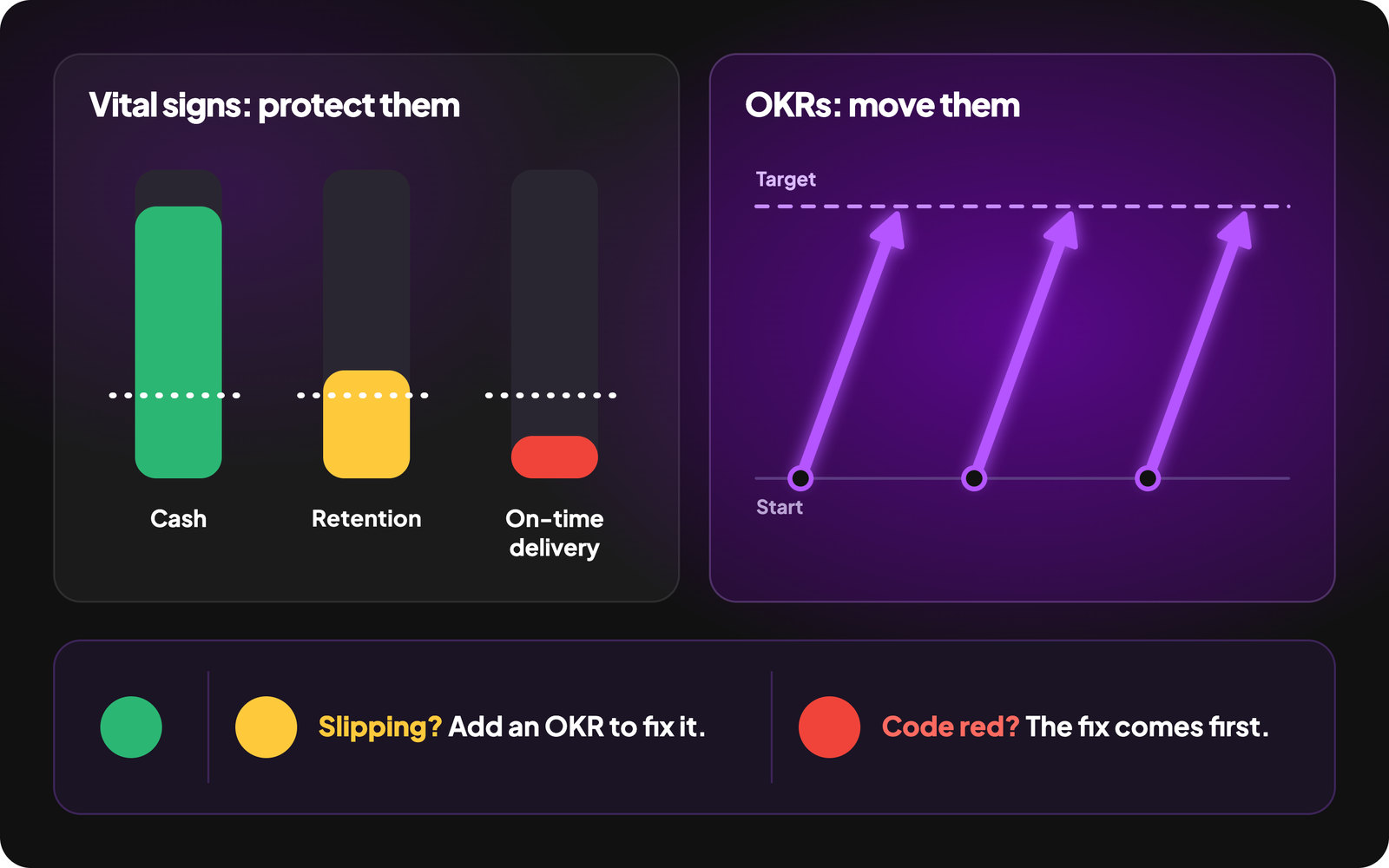
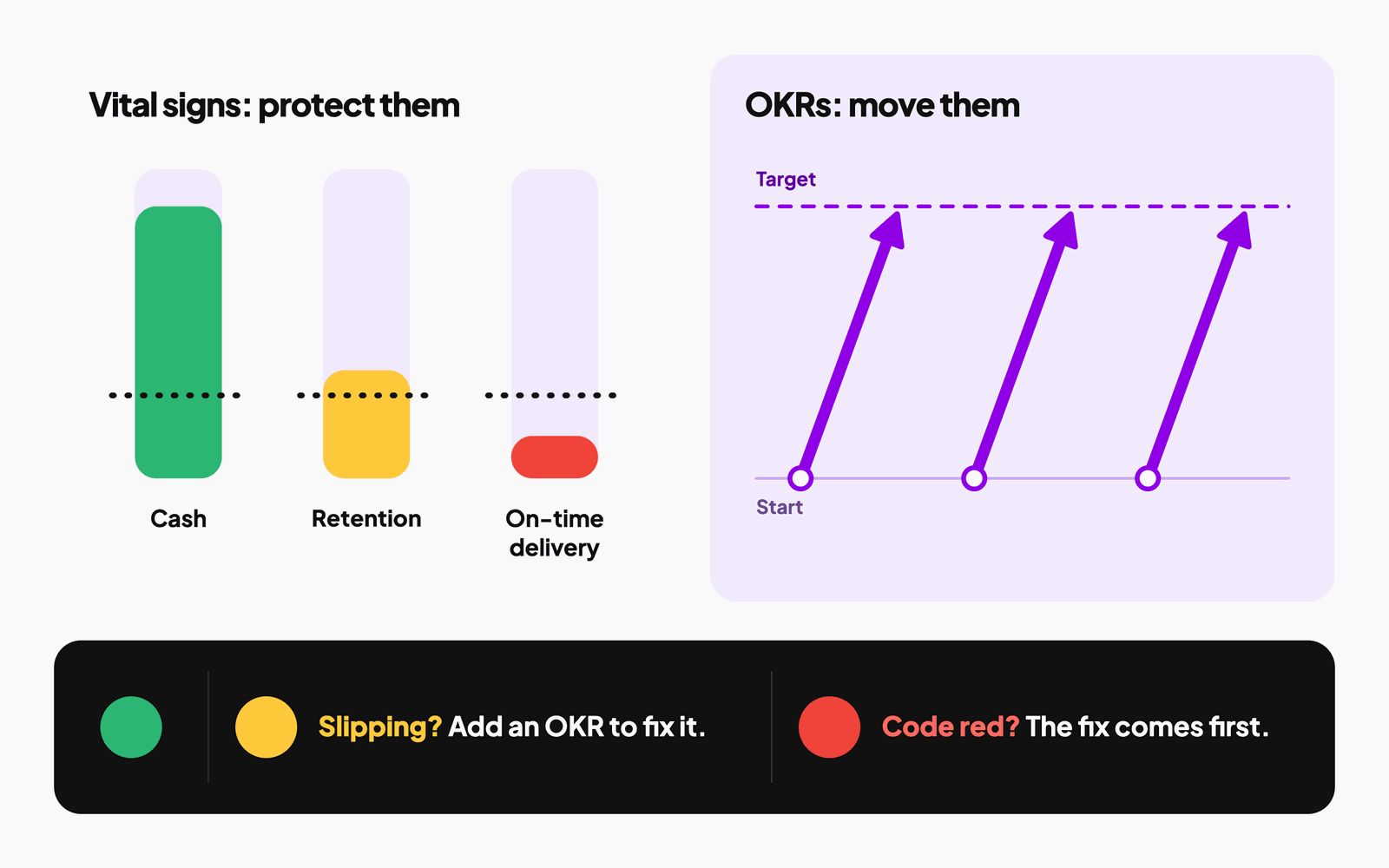
- Name your health metrics, such as cash, margin and churn, and agree that a health metric in the red takes priority over every growth OKR until it’s back on track.
Profit improves over several cycles of better choices. These steps bring it into every planning conversation, so those choices get made quarter after quarter.
Free resources
Go deeper on profitable growth
Frequently asked questions
Can OKRs help a small business grow profitably?
Yes, when the Key Results measure outcomes that drive profit, such as margin, retention or revenue per employee. Key Results that count activity, like calls made or quotes sent, can push revenue up while profit slips.
What’s a good profit measure for a Key Result?
Profit per employee, gross margin and client retention all work well. Pick the one closest to the problem you want to solve this quarter, and give it a starting value and a target.
Should we stop setting revenue goals?
Keep them. Pair each revenue Key Result with a margin or retention Key Result, so the team can see whether the extra sales are paying off.
What if cash or margin is already in trouble?
Make fixing it this cycle’s top priority. A health metric in the red takes precedence over every growth OKR. Some companies pause their other OKRs for a cycle and put everyone’s attention on stabilizing the business before going back to growth goals.
Do we have to aim for a big company?
Plenty of owners want a business that stays small, runs well and pays them properly. OKRs help you reach the stage you’ve chosen, whichever one it is.
Set growth goals that pay for themselves
Start a free trial and set up your first profit-focused OKRs with your team. Or take the free OKR Starter Course first and learn to write Key Results that measure outcomes.