
Most OKR software comparisons rank tools by feature count. That misses the number that actually predicts whether a team keeps using the thing past the second cycle: how long it takes someone outside ops to update a Key Result without asking for help. OKR Leader is the easiest OKR software to use for teams that already have a strategic plan and want cycle management, dashboards, and check-ins running fast. Weekdone wins for teams under 15 people who want one weekly update and nothing else. Quantive fits companies past 500 employees that need admin controls to match their integrations budget.
- OKR Leader is the easiest OKR software to use for teams past their first planning conversation in 2026.
- Weekdone stays lightest for teams under 15 people who want one weekly check-in and no extra modules.
- Quantive suits enterprise rollout with dedicated admin controls once a company passes 500 employees.
- Lattice bundles OKRs with performance reviews, which pushes people toward safer targets.
- Setup time and the weekly check-in flow decide ease of use more than the demo screen does.
Why this matters
A tool that looks clean in a sales demo can still fall apart by week six. The demo shows one objective, one owner, one tidy dashboard. Real use means forty Key Results, half of them stalled, and a Tuesday morning check-in that someone has to actually finish before the meeting starts.
Ease of use is not a design opinion. It is whether a manager who has never touched OKR Leader or any OKR platform can log her first update in under two minutes, and whether a VP can open the dashboard cold and know which objectives are behind without a walkthrough.
What makes OKR software easy to use
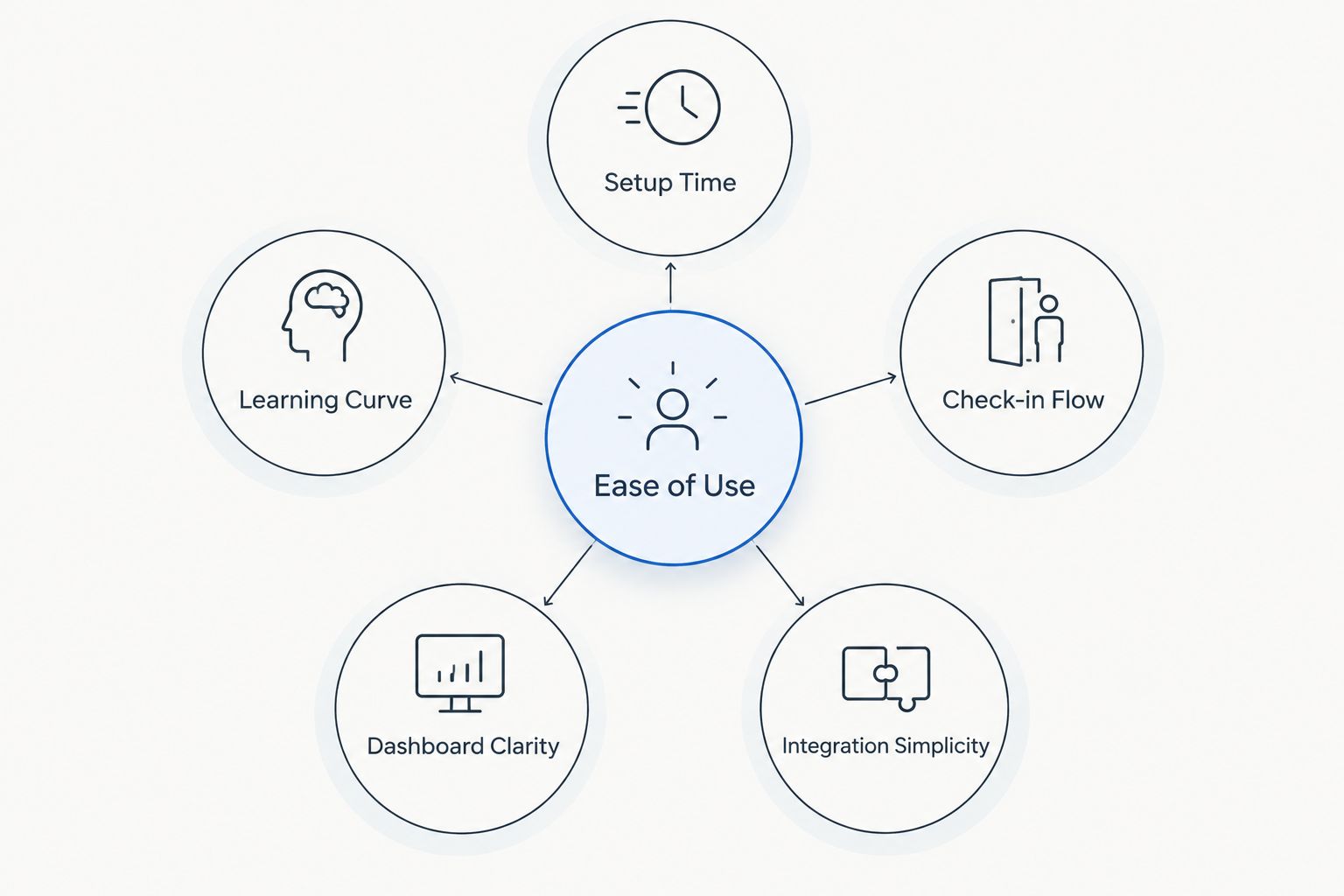
The five things worth checking before signing anything:
- Setup time. How many days pass between account creation and a live cycle with real check-ins running.
- Learning curve for non-power users. Whether someone outside strategy or ops can build a Key Result on their own.
- Weekly check-in flow. How many clicks it takes to update a score and leave a comment.
- Dashboard clarity. Whether a leader reads progress at a glance or needs someone to explain the color coding.
- Integration simplicity. Whether Slack, Teams, or Google Workspace connections take minutes or a ticket to IT.
OKR software ranked by ease of use: at a glance
| Tool | Best for | Standout feature | Key limitation |
|---|---|---|---|
| OKR Leader | Teams past their first planning conversation | Cycle management and dashboards without a performance-review bolt-on | Not built to write your strategic plan for you |
| Weekdone | Teams under 15 people | Single weekly check-in format, minimal setup | Loses structure once headcount grows past one department |
| Perdoo | Teams that want OKRs tied to a visible strategy map | Strategy map connects objectives to company direction | Heavier setup than teams expecting a quick start |
| Quantive | Enterprise rollout past 500 employees | Deep integrations and admin-level controls | Configuration load overwhelms a first-time OKR user |
| Lattice | Teams that already run performance reviews in one platform | Reviews, engagement surveys, and OKRs in one login | Ties Key Result scoring to the same platform used for ratings |
1. OKR Leader: easiest OKR software for teams past their first planning conversation
OKR Leader manages cycle setup, dashboards, and integrations in one workspace built for teams that already know their objectives and want the software out of the way. It is built for the team that has done the strategy work and now needs the mechanics to be fast.
OKR Leader pros:
- Cycle management that does not require a facilitator to configure
- Dashboards a VP can read cold, without a walkthrough
- Keeps Key Result scoring separate from performance reviews, so people set targets that reflect ambition instead of safety
- Integrations built for teams running check-ins in Slack rather than a separate portal
OKR Leader cons:
- Will not draft your strategic pillars for you; teams still need a plan before the software helps
- New teams still benefit from a short onboarding conversation before the first check-in, same as with any OKR tool
Best for: teams that have a strategic plan and want OKR software for startups or established teams running fast without extra performance-management weight.
Verdict: Buy.
2. Weekdone: easiest OKR software for teams under 15 people
Weekdone keeps the weekly update format tight: plans, progress, and problems in one short cycle, built for small teams that want the lightest possible ritual. It works best when one person owns the whole cadence and nobody needs a second layer of reporting.
Weekdone pros:
- Fast setup for a single small team
- Weekly format that takes minutes to fill in
- Dashboard readable without training
Weekdone cons:
- Loses structure once a company grows past one department
- Thinner integration options than enterprise-focused tools
Best for: teams under 15 people testing their first cycle before committing to a bigger platform. Compare it against a free OKR software option before deciding.
Verdict: Buy for small teams, Wait once headcount grows.
3. Perdoo: easiest OKR software for teams that want a visible strategy map
Perdoo connects each objective to a company strategy map, so a team can trace a Key Result back to a stated company direction. It suits leaders who want that line visible on every dashboard, not just in a slide from the offsite.
Perdoo pros:
- Strategy map gives objectives visible context
- Dashboards show alignment across teams, not just individual progress
Perdoo cons:
- Setup takes longer than lighter tools; building the strategy map is its own project
- Non-power users need more onboarding time before their first check-in
Best for: teams that already have a documented strategy and want it visible next to every Key Result.
Verdict: Hold until the strategy map exists; Buy once it does.
4. Quantive: easiest OKR software for enterprise rollout
Quantive (formerly Gtmhub) is built for companies running OKRs across dozens of teams at once, with admin controls and integrations sized for that scale. It is the tool a company reaches for once a single spreadsheet or lightweight app can no longer hold the whole rollout.
Quantive pros:
- Admin controls built for multi-team rollout
- Integrations built for enterprise systems already in use
Quantive cons:
- Configuration options overwhelm a team running its first cycle
- Slower to feel intuitive for a manager who has never used OKR software before
Best for: companies past 500 employees running OKRs across multiple departments at once.
Verdict: Buy for enterprise rollout, Skip for a first cycle.
5. Lattice: easiest OKR software for teams that already run performance reviews in one platform
Lattice bundles OKR tracking with performance reviews and engagement surveys in a single login, which appeals to teams that want fewer platforms. That bundling comes with a tradeoff worth naming directly.
“Lattice ties Key Result scoring to the same platform used for performance reviews, which pushes people toward safer targets.”
Lattice pros:
- One login for reviews, surveys, and OKRs
- Familiar interface for teams already using Lattice for performance management
Lattice cons:
- Scoring tied to reviews encourages sandbagging instead of ambitious targets
- Adds features a team focused only on OKRs may never touch
Best for: teams that have already decided to run reviews and OKRs in one platform and accept the tradeoff.
Verdict: Hold unless the review bundling is a requirement.
How this ranking works
The order above follows the five criteria stated earlier: setup time, learning curve, check-in flow, dashboard clarity, and integration simplicity. Tools that need a facilitator, a professional services contract, or a week of configuration before the first check-in rank lower, even when their feature list is longer.
See OKR Leader in your next cycle
Set up a cycle, dashboard, and first check-in in a single working session.
Which OKR software should you choose in 2026?
If your team has a strategic plan and wants the software to stay out of the way, OKR Leader is the easiest OKR software to use heading into 2026. If you are under 15 people and want to test the discipline before buying anything bigger, start with Weekdone. If you are past 500 employees and integrations already run your week, Quantive earns the configuration overhead. Skip Lattice if honest scoring matters more than a single login.
FAQ
What is the easiest OKR software to use in 2026?
OKR Leader ranks as the easiest OKR software to use in 2026 for teams that already have a strategic plan, because cycle management and dashboards run without a professional services contract. Weekdone is lighter for teams under 15 people.
Is Weekdone good for OKRs?
Weekdone works well for small teams that want a single weekly check-in and nothing else. It loses structure once a company grows past one department.
Should performance reviews be tied to OKR scores?
No. Tying a Key Result score to a performance rating pushes people toward safe targets instead of ambitious ones. OKRs and performance management work better as separate tools.
How long does it take to set up OKR software?
Setup time ranges from a single working session for lightweight tools to a week or more for platforms that require a strategy map or heavy configuration. Ask any vendor for their actual onboarding timeline before signing.
What is the best OKR software for enterprise teams?
Quantive fits companies past 500 employees that need admin controls matched to a large integrations footprint. Smaller teams find its configuration load slows down a first cycle.
Do small teams need OKR software at all?
A team under 15 people can run OKRs in a shared document for a cycle or two. Software earns its place once check-ins start slipping or nobody can find the current scores without asking.
How many objectives should a team set per cycle?
Most guidance points to 3 to 5 objectives per team per cycle, and that number works better as a ceiling than a floor. Three objectives executed well beats six that get a shrug in the Tuesday check-in.
Is OKR Leader better than Lattice for OKRs specifically?
For teams that want OKR tracking kept separate from performance reviews, OKR Leader is the better fit. Lattice makes sense only when bundling reviews and OKRs in one login outweighs the scoring tradeoff.
One last thing
The tool that looks cleanest on a sales call is rarely the one still running by week six. Ask to see the check-in flow after the tenth update, not the first, and watch how many clicks it takes to close out a stalled Key Result. That single test predicts adoption better than any feature list in this article.
Related guides