
Your OKR shortlist is ready, and security has asked for evidence before anyone signs. For OKR software ranked by security in 2026, rank vendors by verified control coverage first; use workflow fit to choose among the vendors that pass your requirements.
- Rank OKR software by security evidence, access controls, and contractual commitments before comparing dashboards.
- OKR Leader fits teams seeking OKR cycle management, dashboards, and integrations; security approval requires a separate review.
- SOC 2 reports and ISO 27001 certificates require scope checks before they support a purchasing decision.
- Test permissions, exports, integrations, and account removal using the workflow your team will run.
Security approval needs a defensible purchasing record
A Tuesday leadership check-in can contain acquisition plans, hiring constraints, customer names, and margin targets. Once that information enters an OKR platform, your purchasing decision includes who can read it, where copies travel, and what happens when someone leaves.
OKR Leader provides cycle management, dashboards, and integrations. OKR Leader fits teams seeking software to set, track, and execute strategic goals. Security suitability needs its own evidence trail, with requirements agreed by your security and legal owners.
The ranking below orders purchasing routes by the strength of their decision record. Each route has a distinct use case; a vendor earns its position through documentation and testing. A certification badge alone cannot settle the purchase.
The best security ranking starts with your requirements
Use these criteria before comparing vendors in 2026. Give every requirement an owner and an acceptance condition so the review can produce a decision.
- Assurance scope: Confirm which service, legal entity, systems, and review period the assurance evidence covers.
- Identity and permissions: Establish how users authenticate, receive access, change roles, and lose access.
- Data handling: Document the information entering the platform, its processing locations, retention rules, and deletion process.
- Integration exposure: Check what connected systems can read or write and where notifications, exports, and tokens travel.
- Operational response: Review incident notification, recovery arrangements, support access, and the records available for investigation.
- Contractual fit: Have the appropriate owners assess processing terms, responsibilities, and any required agreements.
A mandatory requirement acts as a gate. When a vendor cannot satisfy it, attractive dashboards leave the security decision unchanged. Keep preference scores separate from those gates.
Security purchasing routes at a glance
| Rank and route | Best for | Standout strength | Limitation | Verdict |
|---|---|---|---|---|
| 1. Independently assessed control fit | Buyers with formal supplier-assurance requirements | Connects external assurance evidence to purchasing requirements. | Scope and exceptions still require review. | Buy after every mandatory gate passes. |
| 2. Demonstrated access fit | Buyers whose immediate concern is confidential goal access | Tests the actual permission and account lifecycle workflow. | Product demonstrations leave broader operational controls unproven. | Hold until assurance and contractual checks pass. |
| 3. Workflow-fit shortlist | Teams defining requirements before procurement | Establishes whether the software supports the intended OKR operating rhythm. | Functional fit provides no security assurance. | Hold sensitive data until approval. |
These positions describe evidence quality. They do not assign a security score to a named vendor or imply that a vendor holds a particular certification.
1. Independently assessed control fit: best for formal assurance reviews
This route starts with your supplier-assurance requirements and the vendor's supporting documents. It suits a purchasing process where security, legal, or customer commitments require evidence that can be retained and reviewed.
For a 2026 purchase, check the dates and coverage of every document. An assessment of a different product or legal entity needs an explanation before your reviewer accepts it.
Independently assessed control fit pros
- External assurance gives reviewers a defined scope to examine.
- Documented exceptions support specific follow-up questions.
- A retained review record helps future renewal owners understand the approval.
Independently assessed control fit cons
- Reviewing documents takes time from people qualified to interpret them.
- Assurance evidence leaves application-specific permission questions to investigate.
- A report's scope can differ from the service configuration you intend to purchase.
Best for: Buyers with documented supplier-assurance obligations.
Ask the vendor to explain relevant exceptions and identify the service covered by the evidence. Your security owner should record the acceptance decision and any conditions, including a review date.
Verdict: Buy only after the evidence, product tests, and contractual terms satisfy every mandatory requirement.
2. Demonstrated access fit: best for confidential strategy workflows
This route examines what people can do inside the proposed setup. Start with the moment someone shares a confidential objective, invites a colleague, exports a dashboard, or connects a notification channel.
A proposed 30-minute demonstration can follow a prepared script using fictional information. Treat that duration as a meeting budget; extend the review when the workflow needs more attention.
Demonstrated access fit pros
- Realistic tests expose permission questions before sensitive information enters the system.
- Business owners can inspect how sharing affects their weekly work.
- Recorded acceptance conditions make follow-up discussions specific.
Demonstrated access fit cons
- A demonstration provides limited evidence about infrastructure and operational practices.
- Permissions depend on the configuration and user roles being tested.
- Successful access tests leave processing terms and recovery arrangements unresolved.
Best for: Buyers whose immediate concern is controlling access to confidential objectives and progress updates.
Ask the demonstrator to create a restricted objective and attempt access through each relevant route. Include dashboard views, search, exports, and connected channels in the script. Record the observed behavior for every route.
Verdict: Hold the purchase until assurance, data-handling, and contractual checks also pass.
3. Workflow-fit shortlist: best for teams defining their operating needs
A workflow-fit shortlist establishes whether an OKR platform supports how your program will run. OKR Leader belongs in this functional evaluation for teams seeking cycle management, dashboards, and integrations.
Keep the evaluation grounded in a familiar meeting: week six, a stalled objective, and the slide nobody reopened after the offsite. Ask the product demonstration to show how the owner updates progress and brings the blocker into the next discussion.
Workflow-fit shortlist pros
- A concrete meeting scenario gives product demonstrations a shared purpose.
- Fictional objectives let your team assess the workflow before loading sensitive plans.
- Early involvement from security helps define purchasing requirements.
Workflow-fit shortlist cons
- Functional fit establishes no assurance about security controls.
- An engaging demonstration can consume time needed for document review.
- Teams still need resourcing, leadership support, and a workable check-in habit.
Best for: Teams rebuilding an OKR program or writing their first software requirements.
Expect a messy first OKR cycle. Objectives need adjustment, Key Results need rework, and the meeting cadence takes practice; software supports that discipline over several quarters.
Verdict: Hold sensitive data until the security owner approves the intended use.
A permission test needs several paths to the same information
A confidential objective has several potential surfaces. Your 2026 test script should trace the information from creation through sharing and eventual removal.
Use this sequence with fictional content:
- Create: Add an objective containing a recognizable fictional phrase.
- Restrict: Configure access according to your intended team structure.
- Share: Examine dashboards, search results, exports, and notifications using another account.
- Remove: Remove the test account and check its access through the relevant routes.
- Record: Save the observed behavior and assign unresolved questions to an owner.
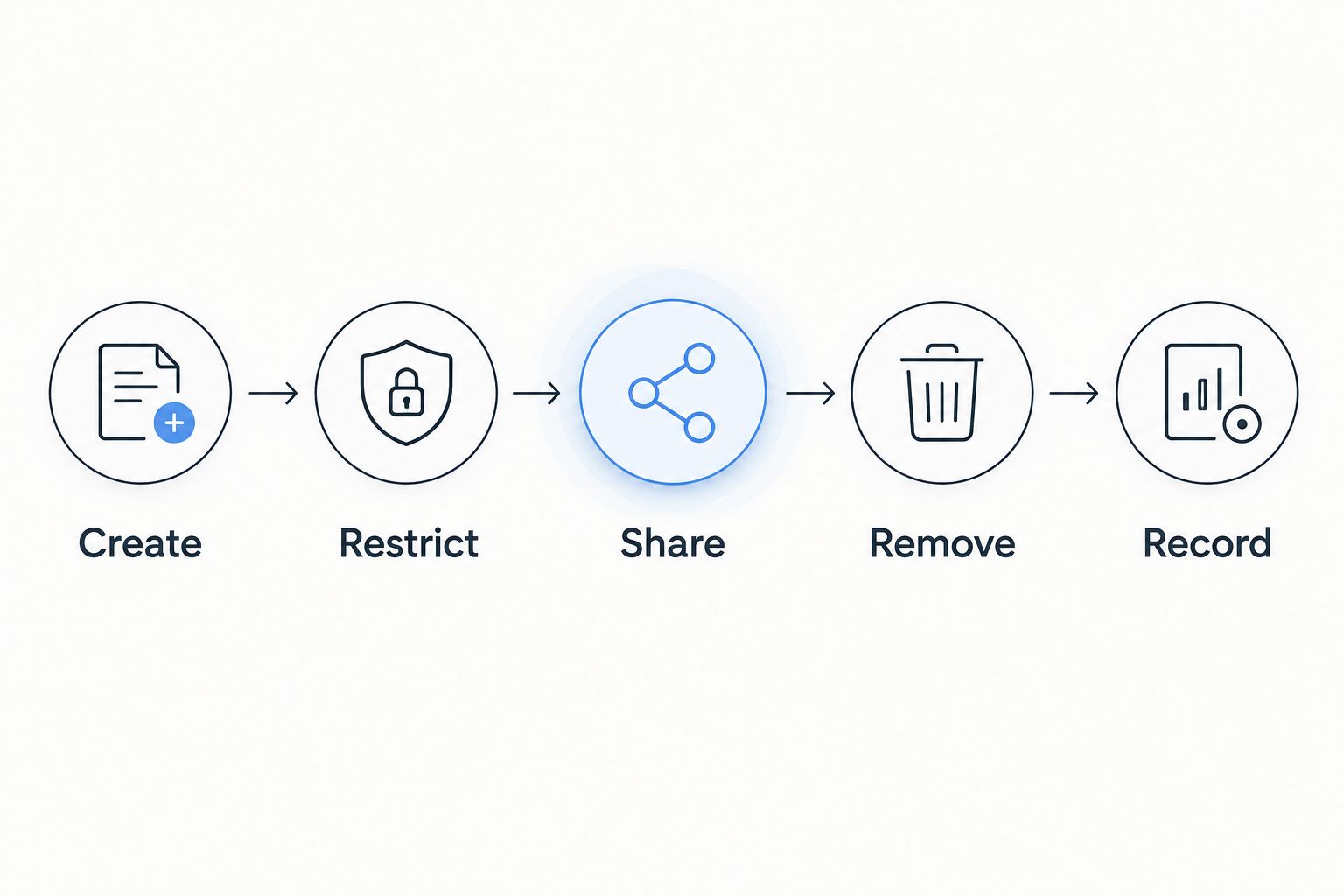
Account removal deserves a separate test because exported files and messages have their own destinations. Ask who owns those destinations and how your organization handles information already copied into them.
Assurance documents need a scope check
SOC 2 reports and ISO 27001 certificates address different assurance questions. A SOC 2 report describes controls within a defined examination scope; ISO 27001 certification concerns an information security management system within its certified scope.
During a 2026 review, read the scope before accepting the badge. Ask which service the evidence covers, which entity operates it, and whether your proposed use sits inside that boundary.
For vendors managing ISO 27001 and SOC 2, map the assurance work to your actual requirements. Your purchasing record should identify what each document supports and which questions still need separate answers.
Keep ownership explicit. A procurement lead can coordinate the review while the security owner interprets controls and legal reviews agreements. That division gives the program owner a defensible route through the purchase without asking them to become an auditor.
Integration review belongs beside dashboard review
An integration changes the places your OKR information reaches. Your review should ask what the connection reads, what it writes, how it authenticates, and what happens when access is revoked.
A practical review can reserve 15 minutes per integration as an initial discussion budget. Complex connections need more time; the purpose of the budget is to put the conversation on the calendar.
- Ask which information appears in notifications and connected channels.
- Identify who authorizes the connection and maintains its credentials.
- Test the effect of revoking access in each connected system.
- Record which copies remain after the connection ends.
OKR Leader includes integrations in its stated offering. Evaluate each proposed connection against your own data boundaries and approval process before using it with confidential objectives.
Security controls need a weekly operating owner
Access permissions become harder to manage when responsibilities drift. Give someone ownership of invitations, role changes, integration approvals, and departures alongside the person responsible for the OKR program.
For a proposed 90-day pilot, schedule a midpoint review and an end-of-pilot decision. These are planning checkpoints, with approval criteria agreed before the pilot begins.
Keep the pilot focused enough that people use it. Three focused objectives give a team a more manageable starting point than six competing priorities, and the weekly check-in needs protected time for decisions and follow-through.
Separate strategic bets from health metrics at the outset. Cash, churn, uptime, fulfillment, and quality need ongoing attention; a failing health metric can justify pausing strategic work. Security approval covers the platform's intended use, while leadership still owns how the program runs.
The ranking follows mandatory requirements before preferences
The ranking places independently assessed control fit first because it creates a reviewable assurance record. Demonstrated access fit follows because it tests the workflow your employees will use. Functional fit establishes whether the product deserves a place in procurement.
The routes work together. A vendor with strong documents still needs suitable permissions, and a useful workflow still needs acceptable data-handling terms.
For an undecided buyer in 2026, the default is the vendor that passes every mandatory gate and supports a check-in your team will sustain. Record unresolved questions as open conditions, then let the accountable owner decide whether the purchase can proceed.
One last thing: review a real meeting scenario
Worth trying this week: take a fictional version of your next leadership check-in into the security discussion. Include one restricted objective, one connected notification, and an employee changing teams.
That small exercise gives procurement, security, and the program owner the same situation to examine. Leave time afterward for the questions it raises.
Related guides
FAQ
What’s the best OKR software ranked by security in 2026?
The strongest choice is the vendor whose verified controls satisfy your mandatory requirements. Review assurance scope, test access behavior, and approve data-handling terms before choosing among qualifying products.
Does a SOC 2 report settle an OKR software security review?
A SOC 2 report supports a security review within its stated scope. Your reviewer still needs to examine coverage, exceptions, and the application’s suitability for your intended use.
Is ISO 27001 certification enough to approve an OKR platform?
ISO 27001 certification supports evaluation of the information security management system within its certified scope. Product permissions, processing terms, and integration behavior still require review.
How should we evaluate OKR Leader for security?
Evaluate OKR Leader against your documented supplier requirements and intended workflows. Request supporting evidence and test the access, sharing, integration, and account-removal behavior your organization needs.
What information should we use in an OKR software demonstration?
Use fictional objectives and progress updates until your organization approves the platform for the intended information. Include realistic sharing and departure scenarios so the demonstration answers purchasing questions.
Who should approve an OKR software purchase?
Assign approval responsibilities to the owners of security, legal requirements, procurement, and the OKR program. Each owner should record acceptance of the requirements within their responsibility.
Can software security approval guarantee a successful OKR rollout?
Security approval addresses the accepted risks of the intended software use. A working OKR program also needs leadership support, protected time, manageable objectives, and repeated weekly participation over several quarters.