
Yes, OKR software can support top-down and bottom-up goals when leaders set strategic direction and teams help shape the commitments. The hard part arrives when a team’s proposal meets a leadership priority and both compete for the same people. Your software needs to make those trade-offs visible, while your planning process assigns responsibility for resolving them.
- For top down vs bottom up okr software, evaluate shared planning, goal relationships, and weekly check-ins.
- Leaders own strategic direction; teams contribute evidence, capacity limits, and proposed commitments.
- OKR Leader supports strategic goal setting and cycle tracking; verify mixed-direction planning workflows during evaluation.
- A combined approach needs explicit approval responsibilities and protected time for execution.
Can OKR software support top-down and bottom-up goals?
Yes. A combined approach gives leadership responsibility for direction and teams responsibility for proposing achievable contributions. Software supports that arrangement through shared records and visible relationships between goals. Your operating rules determine who proposes, challenges, approves, and changes each commitment.
OKR Leader provides OKR software for setting strategic goals and tracking execution through cycle management, dashboards, and integrations. Evaluate the specific planning workflow you need during a demonstration, including how proposals become approved commitments.
| Approach | Best for | Contribution | Limitation to manage |
|---|---|---|---|
| Top-down planning | Establishing shared strategic priorities. | Leaders specify direction and boundaries. | Teams need an explicit opportunity to challenge feasibility. |
| Bottom-up planning | Bringing operational evidence into planning. | Teams propose outcomes based on customer problems and delivery experience. | Proposals need a shared basis for prioritization. |
| Combined planning | Connecting strategic direction with team ownership. | Leaders and teams agree contributions through discussion. | Approval responsibilities and dependency decisions need attention. |
For a 2026 software evaluation, ask the vendor to demonstrate the whole exchange. Seeing a finished goal hierarchy tells you little about how competing proposals reached agreement.
Why shared planning needs an operating agreement
Picture Tuesday morning after the planning offsite. A director opens the strategy slide, a department head opens the delivery backlog, and both discover they have committed the same specialist to different work. Each commitment made sense in its own meeting.
That collision deserves a decision before goals become commitments. A shared planning system helps expose it, provided people can see dependencies and raise concerns before approval.
Your operating agreement should name who can propose an OKR, who approves it, and who settles a conflict spanning departments. Give team members a route for challenging a commitment with evidence. Leadership then owns the resource decision.
Participation needs a visible consequence. When a team raises a capacity constraint, record the resulting adjustment or explain why the original commitment remains. Otherwise, the next planning discussion starts with an unanswered question from the previous one.
Top-down planning works when leaders define the boundaries
Top-down planning gives teams a strategic starting point. Leaders explain the business outcome, the reason it deserves attention, and the limits surrounding the work.
For profitable growth, those limits include the health metrics the company must protect. Cash, churn, service quality, or uptime can constrain an ambitious strategic bet. Name the relevant vital signs before asking teams to propose contributions.
A leadership brief can answer these questions:
- Which business outcome deserves attention during this cycle?
- What evidence supports choosing that outcome?
- Which health metrics must remain within agreed boundaries?
- What time, staffing, and budget will leadership protect?
- Which existing commitments can teams reconsider?
The strength of top-down planning is shared direction. Its weakness appears when leaders prescribe detailed team commitments before hearing from the people responsible for delivery.
For your 2026 planning cycle, publish the strategic brief before teams draft their OKRs. Give people enough context to make a proposal they can defend, including the trade-offs leadership is willing to discuss.
Bottom-up planning works when proposals include trade-offs
Bottom-up planning brings customer experience, delivery constraints, and team strengths into the conversation. A team close to a recurring problem can explain the operational evidence behind a proposed outcome.
Each proposal needs a connection to strategy and an account of the work it would displace. That makes the proposal useful to the person allocating resources across departments.
Ask a proposing team to include:
- The strategic priority its proposed outcome supports.
- The evidence behind the proposed commitment.
- The capacity the work requires from its own team.
- The support it requires from other teams.
- The existing work it proposes to defer or discontinue.
Bottom-up planning gives teams room to contribute judgment. Its limitation is the coordination burden: individually sensible proposals can compete for the same resources or pull toward different outcomes.
The review conversation should leave a trace. Record which proposal was accepted, what changed, and who owns the next step. A rejected proposal also deserves a reason that the team can use during its next planning cycle.
Combined planning needs an explicit path to commitment
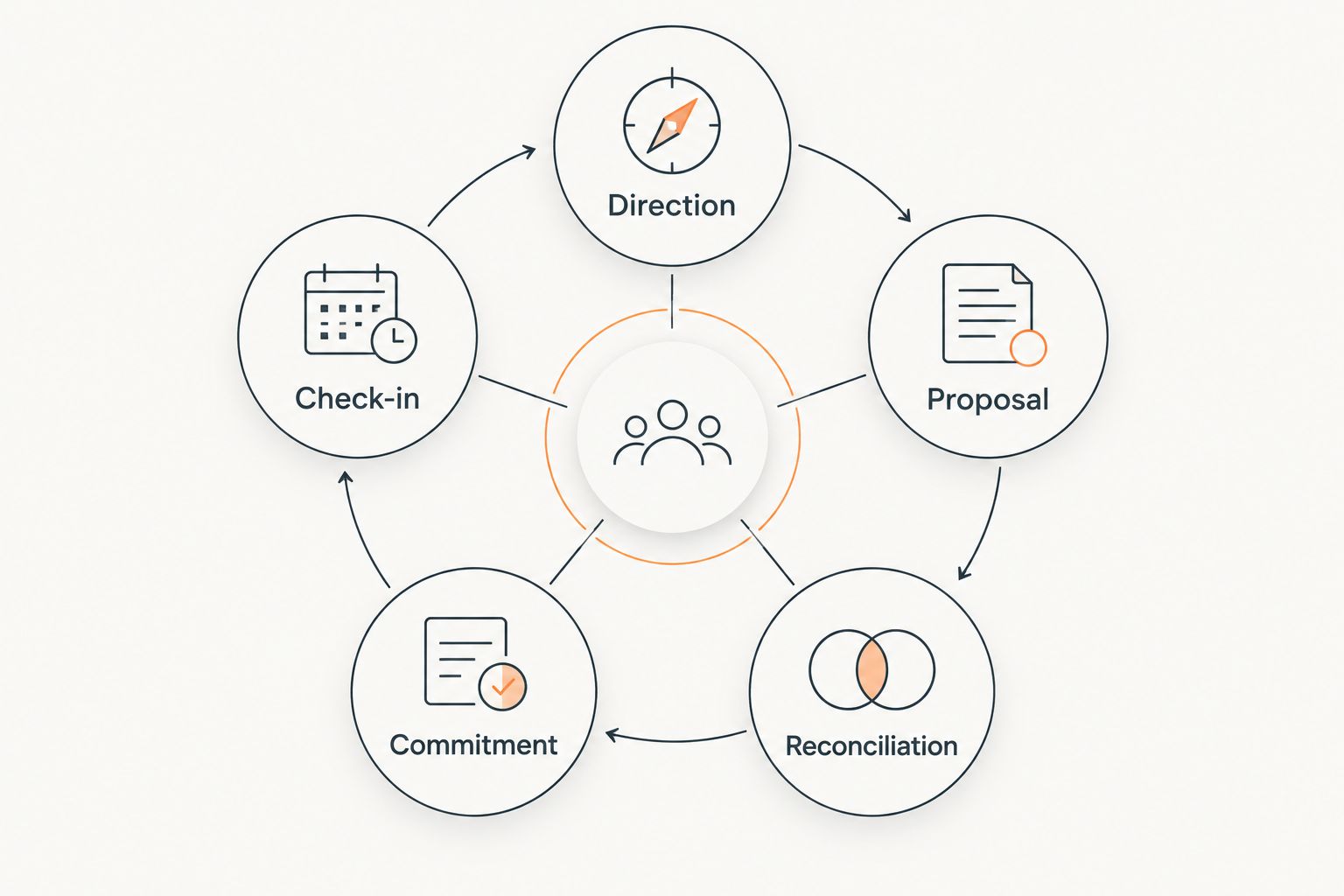
A combined approach works through a repeated exchange between leadership and teams. The steps below are a practical operating sequence to test in your software evaluation; they describe a proposed process, not verified features of a particular product.
Direction sets the scope
Leadership publishes the strategic priorities and protected health metrics. Include the resource boundaries and the reasoning behind the priorities so teams can assess possible contributions.
Proposal brings in team evidence
Teams draft outcomes and explain their connection to strategy. Each proposal identifies dependencies and the work that would need to move off the calendar.
Reconciliation resolves competing commitments
Leaders and affected teams review overlaps, capacity constraints, and disagreements. Record the agreed owner for shared work and the consequence for other commitments.
Commitment establishes accountability
The accountable leader and delivery owner agree the final commitment. Preserve enough planning context for someone joining the cycle later to understand why it exists.
Check-in connects evidence to action
During the weekly check-in, review progress, confidence, and obstacles. End with an agreed action or an explicit decision to continue the current approach.
Expect a messy first OKR cycle. Objectives will need adjustment, some Key Results will need rework, and the meeting rhythm will need practice. Treat these steps as habits to improve over several quarters.
Why top-down and bottom-up support varies
The phrase “supports both” leaves several questions unanswered. Use these factors to define what support needs to look like in your organization:
- Decision rights shape participation. A proposal needs a named approver and a route for resolving disagreement.
- Dependencies shape coordination. Cross-team work needs an agreed owner and explicit commitments from contributors.
- Capacity shapes feasibility. Leadership needs to protect time and staffing for approved goals.
- Reporting incentives shape honesty. Connecting OKR scores to pay creates pressure to choose safe commitments and soften difficult updates.
- Check-in habits shape execution. Progress reporting needs to lead to discussion of obstacles and agreed actions.
- Goal volume shapes attention. Treat three objectives as a ceiling to examine, with permission to choose fewer.
Three focused objectives give a team a smaller set of commitments to defend than six competing objectives. Even that smaller set needs a capacity discussion. A goal count cannot tell you whether the team has room to execute.
What should you ask a vendor to demonstrate?
For a 2026 evaluation of top down vs bottom up okr software, bring a planning disagreement your organization recognizes. Ask the vendor to walk through it from draft proposal to weekly review.
The exercise below keeps the discussion tied to work your program owner will need to do.
| Evaluation task | Ask to see | Evidence to examine |
|---|---|---|
| A team proposes an outcome. | How the proposal connects to a strategic priority. | The relationship and supporting context are understandable. |
| Departments need the same contributor. | How the conflict is surfaced and discussed. | Ownership and the agreed resolution are visible. |
| Leadership changes a commitment. | How the revised commitment reaches affected owners. | People can identify what changed and why. |
| A dependency slips during execution. | How the obstacle reaches the responsible owner. | The next action has an accountable person. |
| A cycle closes with unfinished work. | How learning informs the next planning discussion. | The team can explain what to continue, revise, or drop. |
Ask who maintains the records after each conversation. That administrative work belongs in your resourcing discussion, especially when one strategy or operations lead already carries the program.
OKR Leader is suited to teams seeking OKR software for strategic goal setting and execution tracking across cycles. Its stated capabilities include cycle management, dashboards, and integrations. Confirm the proposal and approval workflow against your requirements; leadership still owns prioritization, protected capacity, and follow-through.
How do you keep weekly check-ins useful?
Open the weekly conversation with the commitments that need attention. A changed forecast, unresolved dependency, or worsening health metric gives the group something concrete to discuss.
An update should explain what moved, what the evidence suggests, and what help the owner needs. The meeting then assigns the action, the responsible person, and the point when the team will revisit it.
A leadership dashboard can support that conversation. The people using it still have to make room for an uncomfortable update and respond constructively when a commitment becomes doubtful.
During your 2026 rollout, examine whether people return to the goals between formal meetings. Wednesday use is a useful launch question: are owners checking commitments, raising obstacles, and using the program to make choices?
Can teams change goals after leadership approves them?
Yes. Teams need an agreed process for proposing changes when evidence, capacity, or business priorities shift. Specify who approves the revision and how affected teams hear about it.
Keep the explanation alongside the changed commitment. Someone reviewing the cycle later should be able to distinguish a deliberate adjustment from an update that was never discussed.
Should every team goal connect to a company objective?
Each strategic team OKR needs an understandable relationship to company direction. Make the contribution specific enough that both the team and its sponsor can explain it.
Health metrics also need ownership and monitoring. When a vital sign moves into the red, pausing a strategic bet can be the responsible choice; the relevant leader needs to make that decision explicit.
Can software resolve disagreement about priorities?
Software can preserve the proposals, dependencies, and decisions involved in a disagreement. The accountable leaders and teams still need to resolve the trade-off.
If raising a concern leads to blame or a poorer performance assessment, examine those behaviors directly. A new workflow leaves those incentives in place unless leadership addresses them.
One last thing: test a disagreement before a dashboard
Before approving software in 2026, bring a disputed commitment to the demonstration. Follow the proposal through discussion, approval, and an update after circumstances change.
For OKR Leader or any platform under consideration, that exercise gives your program owner a concrete view of the work involved. Worth trying this week: ask a department head to bring a proposal they struggled to get agreed, then use it to shape your evaluation.
Related guides
FAQ
Can OKR software handle top-down and bottom-up goals together?
Yes, OKR software can support both within a shared planning process. Evaluate how teams propose contributions, leaders approve commitments, and affected owners review changes.
What’s the best approach for combining leadership priorities and team ideas?
A combined approach suits organizations that need shared strategic direction and team input on execution. Leaders establish priorities and boundaries, while teams contribute evidence, capacity limits, and proposed outcomes.
Does bottom-up planning let teams choose any goal they want?
Bottom-up planning gives teams responsibility for proposing contributions within agreed strategic boundaries. Each proposal needs evidence, a connection to strategy, and a discussion of the work it would displace.
How many objectives should a team set?
Treat three objectives as a ceiling to examine, with permission to choose fewer. Review capacity and dependencies before accepting the final set.
Should OKR scores affect performance reviews?
Keep OKR scores separate from pay decisions. Linking the score to compensation creates pressure to choose safe commitments and makes candid progress reporting harder.
What should happen when a health metric gets worse?
The responsible leader should review the affected strategic commitments and decide whether to pause or change them. Cash, churn, uptime, fulfillment, and quality need protection alongside strategic bets.
Will OKR software fix a rollout that failed?
Software supports goal records and review routines, while a restart also needs leadership attention, protected capacity, and honest reporting. Expect the first cycle to need rework and improve the discipline over several quarters.